Search This Blog

Tuesday, March 4, 2014

An $80,000 Tweet

As discussed in Chapter 6, new media writing requires increased attention to audiences and how audiences receive information. A tweet might be intended for just your followers, but those followers can retweet and quickly spread your message.

Such was the case for the daughter for former Gulliver Preparatory School head Patrick Snay. Snay was just awarded $80,000 in a settlement with Gulliver Prep for an age discrimination complaint. However, this agreement depended on confidentiality, that no one else would know about the settlement.

Enter Snay's daughter, who took to Twitter to voice her opinion on the confidential matter to her nearly 1200 Twitter followers:
Mama and Papa Snay won the case against Gulliver. Gulliver is now officially paying for my vacation to Europe this summer. SUCK IT.
The message quickly spread, and school officials found out about the confidentiality breach. As a result, the judge ruled the settlement could be cancelled, costing Snay the loss of the $80,000.

Read the whole story here:

Girl costs father $80,000 with 'SUCK IT' Facebook post


Sunday, February 23, 2014

Narrating the Olympics

Chapter 9 of The New Media Writer discusses writing for different visual media, including dialogue and voice-over narration.

In the spirit of the Olympics, check out this curling match narrated by Sir David Attenborough. Notice how the narration doesn't just state what's obviously going on in the video, but how the narration compliments and adds value to watching the event.

You can read a more detailed post about the clip here:

Sir David Attenborough Narrates Women's Olympic Curling Event, And It Is Pure Gold

Tuesday, February 18, 2014

The Nonhuman Writers of Wikipedia

Chapter 5 of The New Media Writer discusses search engine robots and other web bots as potential audiences of your online writing. Wikipedia is just one of those sites to which you might contribute that uses bots to read its content. 

However, those bots also help write articles, or more specifically, edit them. 

Consider this recent article from MIT Technology Review that discusses work by Thomas Steiner that helps to pinpoint how much "writing" bots perform on Wikipedia (and Wikidata, a site that works in tandem with Wikipedia). Specifically: 
...at the time of writing, across all language version of Wikipedia there are 10,407 edits being carried out by Bots and 11,148 by human Wikipedians. So that’s a 49/51 split between bots and humans.
But a closer look at the data reveals some interesting variations. For example, only 5 percent of the edits to the English language version of Wikipedia are being done by bots right now. By contrast, 94 percent of the edits to the Vietnamese version are by bots.
Check out the full article. 

Sunday, February 9, 2014

Tweeting and Job Searches

In a recent post on CNNMoney, Daniel Bortz reports that many job recruiters are now researching potential new employees on social media. As he writes:
"If you want to shine in a competitive workforce, take to Twitter. Nearly 95% of recruiters surveyed by software firm Jobvite used or planned to use social media to find and vet candidates last year."
Twitter allows you to quickly build a social media presence, since tweeting is often quicker than creating other social media content, such as lengthier blog posts.

However, as Bortz states, there are some best practices when using Twitter to build an online presence. Specifically, he lists the following:

  • Perfect the profile
  • Follow the right crowd
  • Tweet with value
  • Pay it forward
View the full article below to read more about how these practices can help you use Twitter to land your next position. 

Sunday, February 2, 2014

Media Ecology, PETA, and Publican Quality Meats

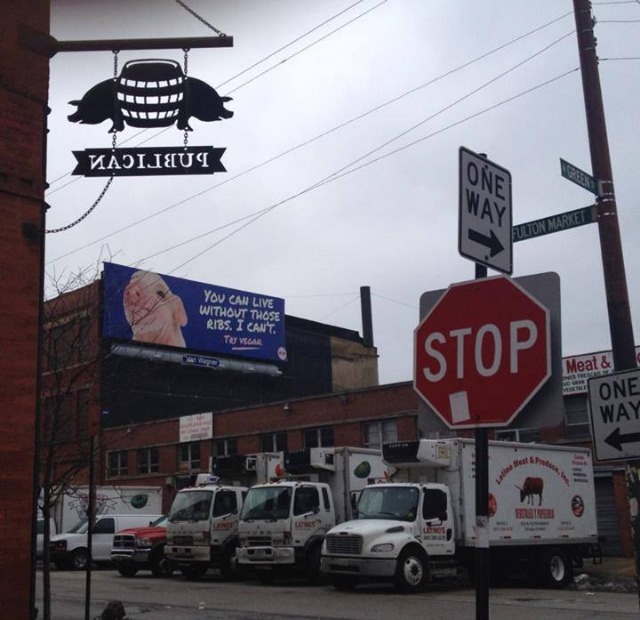
Recently, the organization People for the Ethical Treatment of Animals (PETA), placed an advertisement right next to Publican Quality Meats (PQM) in Chicago, IL.


Given that PETA is trying to get people to stop killing animals for food, this placement makes sense, trying to get their message to their audience as they're going in to get meat.

However, sometimes this kind of placement can backfire, especially if your audience also feels that the target you're arguing against is one of the good guys.

Most consider that even though PQM still sells meat, their approach is more ethical than other meat sellers, in that they do business with farms that sell free range, naturally fed animals who have a better life than most animals raised for slaughter.

While PETA might have had the right idea about ad placement, putting their message near where their audience probably frequents, they might have chose meat sellers who aren't as conscious of where their animals come from.

Read more about this story at the following link. Also consider PQM's response to PETA. What tone do they take? What claim do they make, and how do they support this claim?

Publican Quality Meats Dishes Up Classy Response To PETA Billboard

Monday, January 27, 2014

Style and NFL Logos


With the Super Bowl coming up, this might be a good time to look at the brand mark that each team produces for its brand identity.

In general, most teams try to create a brand mark that looks tough, aggressive, and other adjectives we might associate with football or contact sports in general.

However, a slight change in the style of the brand mark can give it a completely different meaning. Consider the NFL brand marks as revised by David Rappoccio if designed from a hipster perspective.

In what other ways might you revise NFL (or any) brand mark? How does Rappoccio's revisions make the brand marks unsuitable for their intended purpose (or do any of them seem better)?

You can see all the logos here:

What if the NFL Logos Were Hipsters?

Sunday, January 19, 2014

Rickrolling the Teacher

You may have heard of the Internet meme called "Rickrolling," which is surprising an audience with the music video of Rick Astley's "Never Gonna Give You Up." The surprise comes when the audience thinks they author is sending them to one site, but instead sends them to the video.

(For the Wikipedia article on "Rickrolling," go here.)

If you just clicked on the link above, you've seen what I mean.

The actual Wikipedia article is here.

Ok, it's actually here.

Recently, a student "rickrolled" his physics professor by starting the first word of each line of his paper with one of the lyrics from the song. This is an interesting way to remediate new media back into old media, taking an online meme and putting it offline in a printed document. This rickrolling also required the student to think about layout, whether or not he consciously understood his design choices this way at the time.


Click below the full article from io9.com (for real this time).

Student Rickrolls His Teacher in this Ingenious Quantum Physics Essay